Church History
The Artistry Behind Portsmouth Trinity’s Historic Altar Paraments
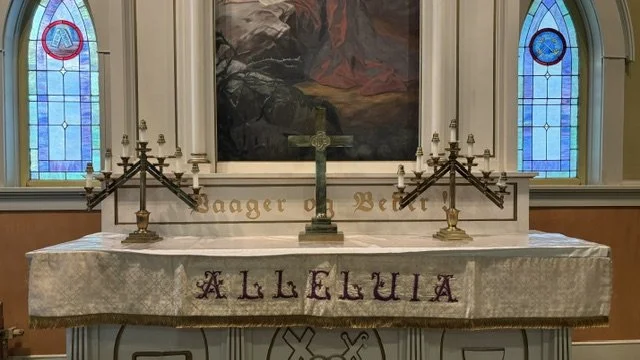
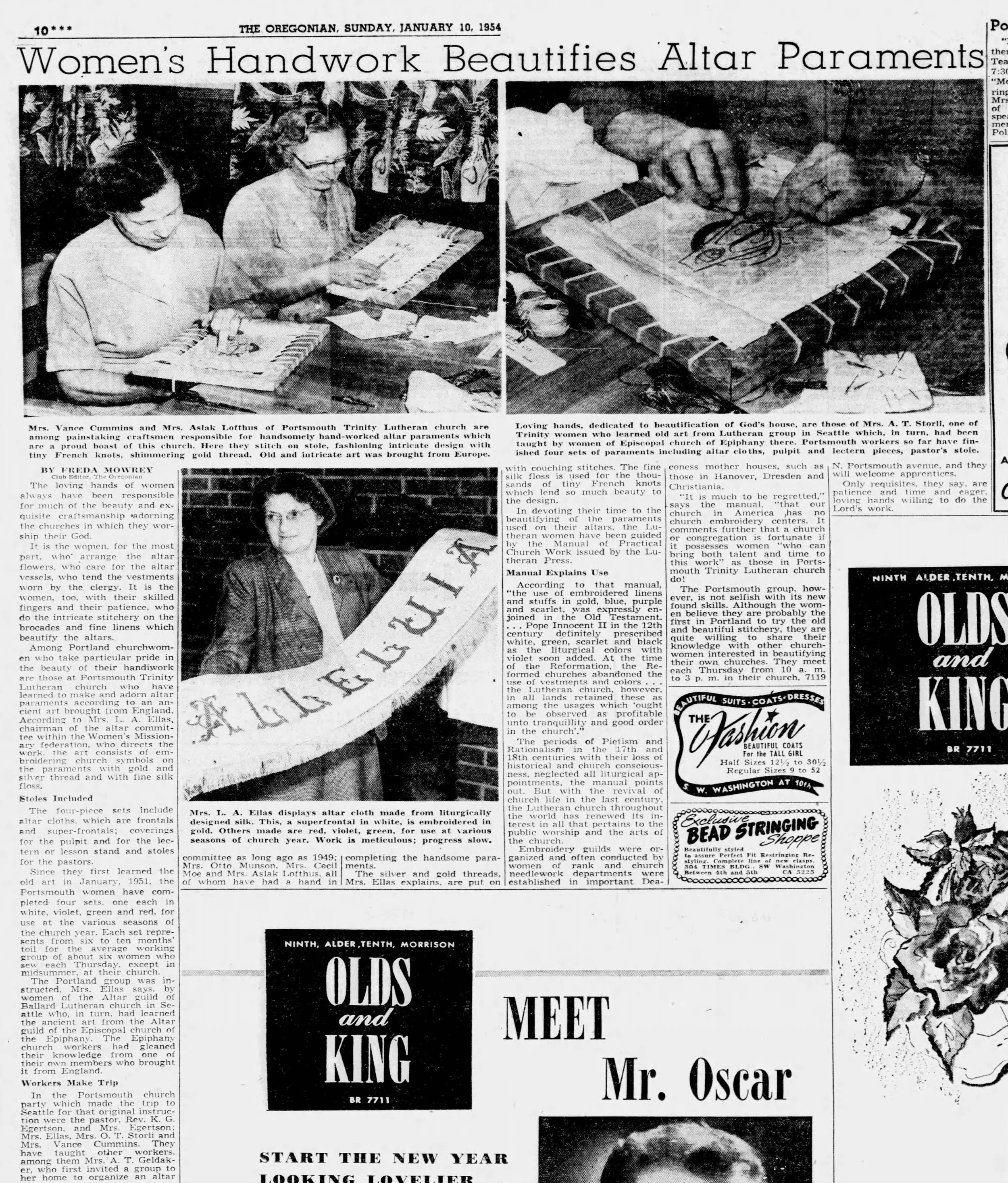
In the early 1950s, a group of dedicated women at Portsmouth Trinity Lutheran Church began a remarkable journey—one that would revive an ancient European needlework tradition and leave a lasting mark on the beauty of the congregation’s worship space.
Their work centered on creating altar paraments: the embroidered cloths used on the altar, pulpit, lectern, and pastoral stoles throughout the church year. What made their efforts extraordinary was not only the craftsmanship, but the heritage behind it.
Reviving an Ancient Craft
The women of Portsmouth Trinity learned their technique from the Altar Guild of Ballard Lutheran Church in Seattle, who themselves had been taught by members of the Episcopal Church of the Epiphany. That lineage traced back even further—to a guild member who had brought the tradition from England.
The method involved:
Gold and silver thread, applied with couching stitches
Fine silk floss, used to create thousands of tiny French knots
Liturgical symbolism, carefully embroidered into each design
Each full set of paraments—white, green, red, and violet—required six to ten months of weekly work by a small group of women who gathered faithfully every Thursday.
A Labor of Love
The original Portsmouth Trinity group included Rev. K. G. Egertson and Mrs. Egertson, Mrs. L. A. Ellas (chair of the altar committee), Mrs. O. T. Storli, and Mrs. Vance Cummins. Over time, more women joined, learning the craft and contributing to the growing collection of seasonal paraments.
Their work was slow, meticulous, and deeply meaningful. The article described their hands as “loving” and dedicated to “the Lord’s work”—a sentiment that still resonates today.
Rooted in Liturgical History
The tradition of embroidered church textiles stretches back to the Old Testament and was formalized in the medieval church. While some denominations abandoned vestments during the Reformation, Lutheran churches retained them as part of their commitment to beauty, order, and reverence in worship.
By the mid‑20th century, interest in church arts was resurging worldwide. Portsmouth Trinity’s embroidery group became part of that revival—one of the few such efforts in the United States at the time.
Sharing the Craft
Far from keeping their skills to themselves, the women welcomed anyone interested in learning. They met weekly at the church on North Portsmouth Avenue, inviting apprentices to join them in preserving a tradition that blended artistry, devotion, and community.
A Legacy That Endures
Today, these handcrafted paraments remain a testament to the faith, patience, and creativity of the women who made them. Their work continues to enrich worship at Portsmouth Trinity, reminding us that beauty offered to God is itself an act of praise. This paraments still hang in our church today. They are changed when necessary by a group of volunteers who take great care.